


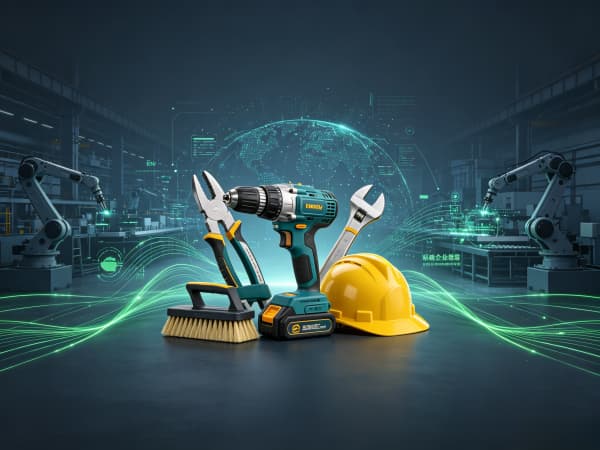
The global hardware tool industry is entering a new stage of transformation in 2026. Intelligent manufacturing, digital technologies, and sustainability initiatives are no longer emerging concepts—they have become essential drivers of competitiveness. Manufacturers, distributors, and industrial users increasingly expect tools that improve productivity while reducing environmental impact.
From smart power tools to eco-friendly production processes, the industry is evolving toward solutions that combine performance, safety, and resource efficiency. Understanding these trends helps businesses prepare for changing customer expectations, regulatory requirements, and manufacturing standards.
Why Intelligent and Green Development Is Reshaping the Hardware Tool Industry
Intelligent development refers to integrating digital technologies throughout product design, manufacturing, quality control, and product usage.
Green development focuses on reducing environmental impact across the product lifecycle, including raw material sourcing, manufacturing, packaging, transportation, and recycling.
Together, these trends address several industry challenges:
- Rising labor costs
- Higher quality expectations
- Carbon reduction targets
- Resource efficiency
- Product traceability
- Workplace safety improvements
Rather than competing independently, intelligence and sustainability increasingly reinforce one another. Digital manufacturing systems help optimize energy consumption, while intelligent quality monitoring reduces production waste.
How Smart Manufacturing Is Changing Hardware Tool Production
Modern hardware manufacturing increasingly relies on interconnected production systems rather than isolated equipment.
Key intelligent manufacturing technologies include:
| Technology | Primary Function | Industry Benefit |
|---|---|---|
| Industrial automation | Automated assembly and handling | Improved consistency |
| Machine vision inspection | Surface and dimensional inspection | Reduced defects |
| Industrial IoT sensors | Equipment monitoring | Predictive maintenance |
| Digital production management | Real-time scheduling | Higher production efficiency |
| Data analytics | Process optimization | Better resource utilization |
For example, automated inspection systems can detect surface defects on wire brushes, paint brushes, or metal hand tools much earlier than traditional manual inspection.
In high-volume production, predictive maintenance also minimizes unexpected equipment downtime by identifying wear patterns before failures occur.
Sustainable Manufacturing Extends Beyond Recycled Materials
Green manufacturing involves much more than selecting environmentally friendly materials.
Many leading manufacturers now improve sustainability through:
- Energy-efficient production equipment
- Reduced VOC coating technologies
- Water-saving cleaning processes
- Waste material recycling
- Optimized packaging design
- Longer product service life
For hardware tools, durability itself contributes to sustainability. A longer-lasting tool reduces replacement frequency, lowers material consumption, and decreases transportation-related emissions throughout its lifecycle.
Manufacturers are also increasingly selecting packaging materials that balance protection, transportation efficiency, and recyclability.
Intelligent Products Are Creating New User Experiences
The evolution of hardware tools extends beyond manufacturing. Products themselves are becoming more intelligent.
Examples include:
- Battery management systems in cordless power tools
- Electronic overload protection
- Brushless motor technology
- Digital torque control
- Wireless diagnostics
- Smart charging systems
These technologies improve operational safety while extending equipment lifespan.
Professional users particularly benefit from features that reduce maintenance requirements and improve operational consistency across multiple worksites.
Although traditional hand tools remain mechanically simple, their design increasingly incorporates ergonomic research, advanced surface treatments, and lightweight materials to improve user comfort during extended use.
Applications Driving Market Growth
Demand for intelligent and sustainable hardware tools is growing across multiple industries.
Construction
Construction projects increasingly require tools that improve productivity while complying with stricter environmental regulations.
Examples include:
- Efficient paint application systems
- Durable masonry tools
- Low-maintenance power equipment
- High-visibility protective gear
Manufacturing
Industrial facilities prioritize equipment reliability and process efficiency.
Common requirements include:
- Precision hand tools
- Abrasive accessories
- Surface preparation brushes
- Industrial cleaning equipment
Home Improvement
Consumers increasingly value products that combine convenience with sustainability.
Popular trends include:
- Cordless DIY tools
- Multi-purpose cleaning brushes
- Lightweight gardening equipment
- Reusable protective products
Industrial Maintenance
Maintenance professionals require durable equipment capable of performing reliably under demanding conditions.
Products emphasizing wear resistance and ergonomic design often reduce operator fatigue during repetitive maintenance tasks.
Long-Tail Trend: How Are OEM Hardware Manufacturers Adapting to 2026 Market Expectations?
OEM manufacturers are investing heavily in flexible production systems to respond more quickly to changing customer requirements.
Several industry developments are becoming increasingly common:
- Modular product development
- Automated quality inspection
- Faster prototype validation
- Digital production traceability
- Sustainable material evaluation
Large-scale manufacturers also continue expanding laboratory testing capabilities to verify product durability, safety, and consistency before mass production.
Companies with diversified manufacturing capabilities are better positioned to support different product categories while maintaining consistent quality systems. For example, manufacturers producing brushes, work gloves, protective equipment, hand tools, and power tools under integrated quality management can optimize production efficiency across multiple product lines while maintaining product consistency.
Innovation also plays a growing role in product development. Rather than focusing solely on cost reduction, manufacturers increasingly invest in ergonomic improvements, enhanced durability, and user-centered designs that respond to evolving professional and consumer needs.
What Should Businesses Watch Beyond 2026?
Several technologies are expected to influence future hardware tool development.
Potential directions include:
- AI-assisted production planning
- Carbon footprint monitoring
- Digital product passports
- Advanced recyclable composite materials
- Smart inventory integration
- More efficient battery technologies
Some of these technologies remain in early adoption stages, while others are already appearing in advanced manufacturing facilities.
Businesses should evaluate these developments based on practical application rather than marketing claims. The most successful innovations typically improve measurable outcomes such as production efficiency, product quality, equipment reliability, or environmental performance.
Looking Ahead
The hardware tool industry in 2026 reflects a broader shift toward intelligent manufacturing and sustainable development. Rather than representing separate initiatives, digital transformation and environmental responsibility increasingly support one another throughout the product lifecycle.
Manufacturers that combine advanced production technologies, rigorous quality control, continuous innovation, and responsible manufacturing practices are better prepared to meet changing global market expectations. At the same time, distributors and end users benefit from tools that deliver greater durability, improved safety, and more efficient performance.
As industrial standards continue to evolve, intelligent and green development is expected to remain one of the defining characteristics of the global hardware tool industry for years to come.
FAQ
What does intelligent development mean in the hardware tool industry?
Intelligent development refers to using digital technologies such as automation, industrial IoT, machine vision, and data analytics to improve manufacturing efficiency, product quality, equipment maintenance, and overall production management.
Why is sustainability becoming important for hardware tools?
Sustainability reduces environmental impact while improving resource efficiency. Longer-lasting products, recyclable packaging, energy-efficient manufacturing, and reduced material waste all contribute to greener industrial practices.
Which hardware products are adopting smart technologies fastest?
Cordless power tools are leading adoption through brushless motors, battery management systems, electronic protection, and digital diagnostics. Manufacturing equipment is also becoming increasingly connected through industrial automation.
How does smart manufacturing improve product quality?
Automated inspection systems, real-time process monitoring, and digital production control help identify defects earlier, reduce variation, and improve manufacturing consistency across large production volumes.
Which industries benefit most from intelligent and green hardware tools?
Construction, industrial manufacturing, maintenance, automotive repair, home improvement, and landscaping all benefit from more efficient, durable, and environmentally responsible hardware solutions.